
The Transformative Power of Dance Education

Updated: Feb 15
The Student-Teacher Relationship as the Vessel for Learning
In Indian cultural contexts, the teacher is rarely just an instructor. We grow up with a deep reverence for the person guiding us. This respect is not only for their knowledge but also for how they shape our learning experiences. At a young age, this reverence can evolve into one of the deepest forms of trust. In this sense, the student-teacher relationship becomes a vessel for learning, holding not only technique but also a young dancer’s sense of self.
The words used in correction, the tone of a room, and who gets encouraged or ignored all teach a young person what they are allowed to feel about themselves. At Kritya, this vessel is built intentionally. Teachers aim to know each student as a person and meet them where they are, while still holding them to rigor and excellence.
This vessel isn’t shaped by intention alone; it is also influenced by the structure of training. Whether learning happens in a large group or in a more intimate format can make a difference. I have experienced both ends of this spectrum. My earliest group training was structured and traditional, later transitioning to a more intimate, small group format. In the best versions of that model, the closeness can be grounding. It allows for tailored feedback, intensive training, and mentorship. This kind of care lets students work hard because their nervous system isn’t expending energy bracing for harm. However, that same closeness also means the teacher’s influence runs deeper, for better or worse.
Alongside technique, students absorb lessons about belonging and worth. These messages aren’t delivered as formal instruction but are embedded in everyday interactions:
“Your body is an instrument” (neutral, respectful, changeable), OR “Your body is a problem” (to be managed, judged, compared)
“Mistakes are information” (how we learn), OR “Mistakes are humiliation” (what makes you unworthy)
“Performance is a skill” (you can be coached into confidence), OR “Performance is a prize” (you earn it by fitting an ideal)
Students can learn these through non-verbal cues, such as the expressions on a teacher’s face or the patience or impatience that follows an error. When we’re young, we rarely interpret these patterns as “teaching.” Instead, we interpret them as reality.
Performance Literacy: Learning to Be Seen
The teacher’s role becomes especially important for performance literacy. This includes the practical and psychological training that transforms a student into a performer. In addition to stage practice and stamina, it encompasses the invisible grammar of being onstage: how to prepare, handle nerves, recover from an error, and feel at home in your own presentation. When this is missing, students may become technically strong but carry a quiet uncertainty: “I can dance, but I don’t know how to be seen.”
I’ve met many dancers who relate to that feeling; I do too. Over time, I tried to reconcile the idea that I was someone who trained in dance but wasn’t a “performer.” That belief didn’t stem from one dramatic moment but grew from what wasn’t taught. Not everyone desires to be a performer, and that is completely valid. At Kritya, teachers meet students where they are and create space for various relationships with dance. However, performance literacy still matters. It provides students with a real choice, rather than leaving them to quietly assume the stage is not for them.

When “Presentation” Becomes Shame
Another crucial aspect of performance readiness is how we discuss appearance and presentation. A respectful approach treats presentation as part of the craft, taught with care and clarity. This includes what supports storytelling, what is customary for the tradition, and what helps a student feel grounded. It’s specific, actionable, and preserves dignity.
In contrast, a harmful approach turns appearance into a moral judgment. Sometimes, it treats the teacher’s aesthetic as the template students must match, using comparison or humiliation as “motivation.” Unfortunately, many dancers carry memories of comments and behaviors that crossed a line—moments when the body stopped being an instrument and became the object of harsh judgment. The tragedy lies not only in the immediate pain but also in the long-term consequences of stifling artistry and making the stage feel unsafe.
Having lived a version of this latter approach, I can say it did not make me a better dancer; it made me want to disappear. It muddied my relationship with dance and my body, long after all choreography was forgotten.
Making Mentorship Visible: What Healthy Teaching Can Look Like
The hopeful part is that none of this is inevitable. Student-teacher relationships can be intense and safe; ambitious and kind; traditional and emotionally intelligent. Below, I list some ways this can be achieved in practice.
For Teachers and Schools:
Teach performance literacy explicitly and step-by-step: stage skills, preparation, and confidence-building.
Use feedback language that is specific and skill-based (alignment, timing, stamina), not identity-based.
Treat bodies as living instruments, not fixed ideals.
Normalize questions and boundaries.
Create pathways to performance that are developmental, not punitive.
For Students and Families:
Look for environments where rigor coexists with respect.
Ask: “How do you support performance readiness for students who want to perform?”
Notice whether correction builds clarity and body awareness or creates fear and shame.
Ending with Hope: The Culture We Can Choose
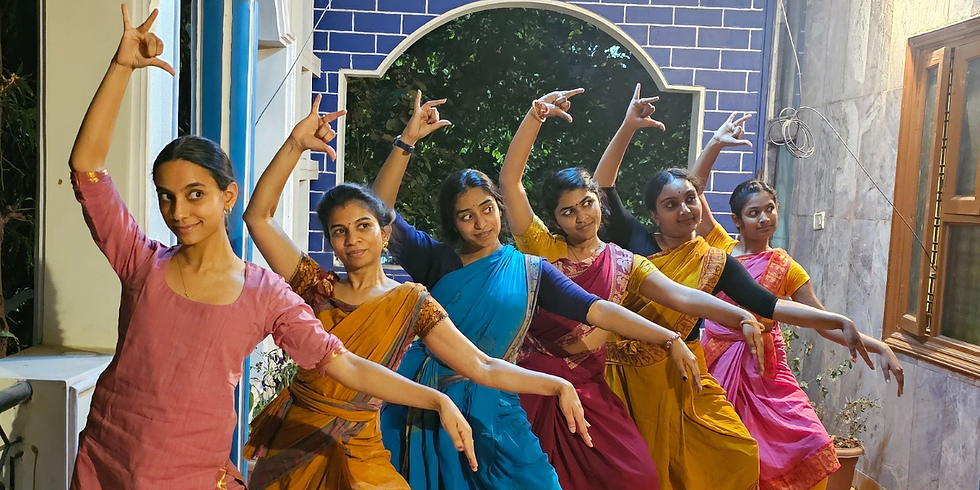
Teachers shape more than technique; they shape what students believe is possible for them—both on stage and off it. That’s why schools like Kritya give me hope. Their philosophy emphasizes that regardless of age, gender, or body type, anyone can dance with the same rigor when there is proper placement, clear intention, consistent conditioning, and deep body awareness.
Teachers like Yamini Kalluri, who see training as both artistry and stewardship, offer a different future. This is a future where discipline doesn’t require humiliation, where performance is taught rather than gate-kept, and where students are supported not only to dance well but also to grow well.
Classical dance asks so much of a student: time, devotion, repetition, and resilience. The least we can do is ensure the environment gives something back. It should provide a steadier sense of self, a healthier relationship with the body, and a stage that feels like home. As for me, I am healing. With the right mentor, I have found the courage to return to learning Odissi with renewed motivation and openness to performing in the future.

About Me
I’m Shreya Jain, a longtime student of Odissi and a new volunteer with Kritya Foundation. My own training journey has made me care deeply about thoughtful, responsible teaching. I’ve long admired Yamini Kalluri’s artistry and mentorship from afar, which is what drew me to Kritya. Outside of dance, I work in public health and neurorehabilitation research. After a workshop with Bijayini Satpathy gave me the courage to return to learning, I now study Odissi with her student, January Low.


Comments